Top tips for your babies first swim.
Thinking about taking your baby for their first swim? The idea alone can be daunting. After having a disastrous first time swim with my 2 year old, I learned from past mistakes and had a totally different and much more successful swim with my second born.
If you’re wondering when can babies start swimming, there is no too soon or too late. NHS guildelines state babies can swim from any age, as long as you choose a safe, clean pool with a good tempreature. You should both be in good health (and healed from birth). If your little one is premature then speak to you GP/Health visitor first,
Here are my top tips and tricks for making that first swim as enjoyable for your both as possible.

Be ready for a feed straight after the swim.
Whether you’re breast or bottle feeding, be ready to feed as soon as you leave the pool. If your baby is formula fed, have a bottle ready and waiting for you as soon as you get back to the changing room. If you’re breastfeeding, offer baby a feed before attempting to redress either yourself or your baby. Even if they have not long fed preveiously, the whole process can be overwhelming for baby as well and giving them that comfort straight out of the pool will ease the transition back into clothes.

Pick a pool and time wisely.
Choose a pool thats child friendly, Leisure centres will ofter offer a kids pool which tend to be warmer. This is especially important for babies under 6 months old. Determine a time that will be quieter in the pool (during the week in term time for example) or a specific baby swim class. This was potentially my biggest mistake with my eldest’s first swim, We chose a “familiy swim” group on a saturday morning, there was a ton of older kids having a great time, splashing and shouting and it completely overwhelmed him. With my second I took him on a weekday morning, knowing the pool would be quiet and he was calm and curious, making for a much more enjoyable experience for us both.
Bring a bathrobe/towel poncho for you and a big towel for baby.
It’s important to prioritise feeding and redressing your baby so they don’t get cold, keeping them nice and calm, Bring a bathrobe for yourself so you can be warm and comfortable, rather than standing over them shivering in a dripping wet swim suit, desperately trying to keep a towel wrapped round you. You will feel calmer and this will influence how your baby feels.

Choose the best swim aids
Possibly the most important part of your swim. Having a decent swim aid for your baby allows them to have free movement to kick and explore. It allows eye contact, which is key for bonding and encouragment. The boyancy will help baby relax and gives you free hands for play. For babies under 1 choose a structured infant swim aid, something secure. We used this one for both my kids and it worked perfectly. (Only use swim aids once baby if holding thier own head up)
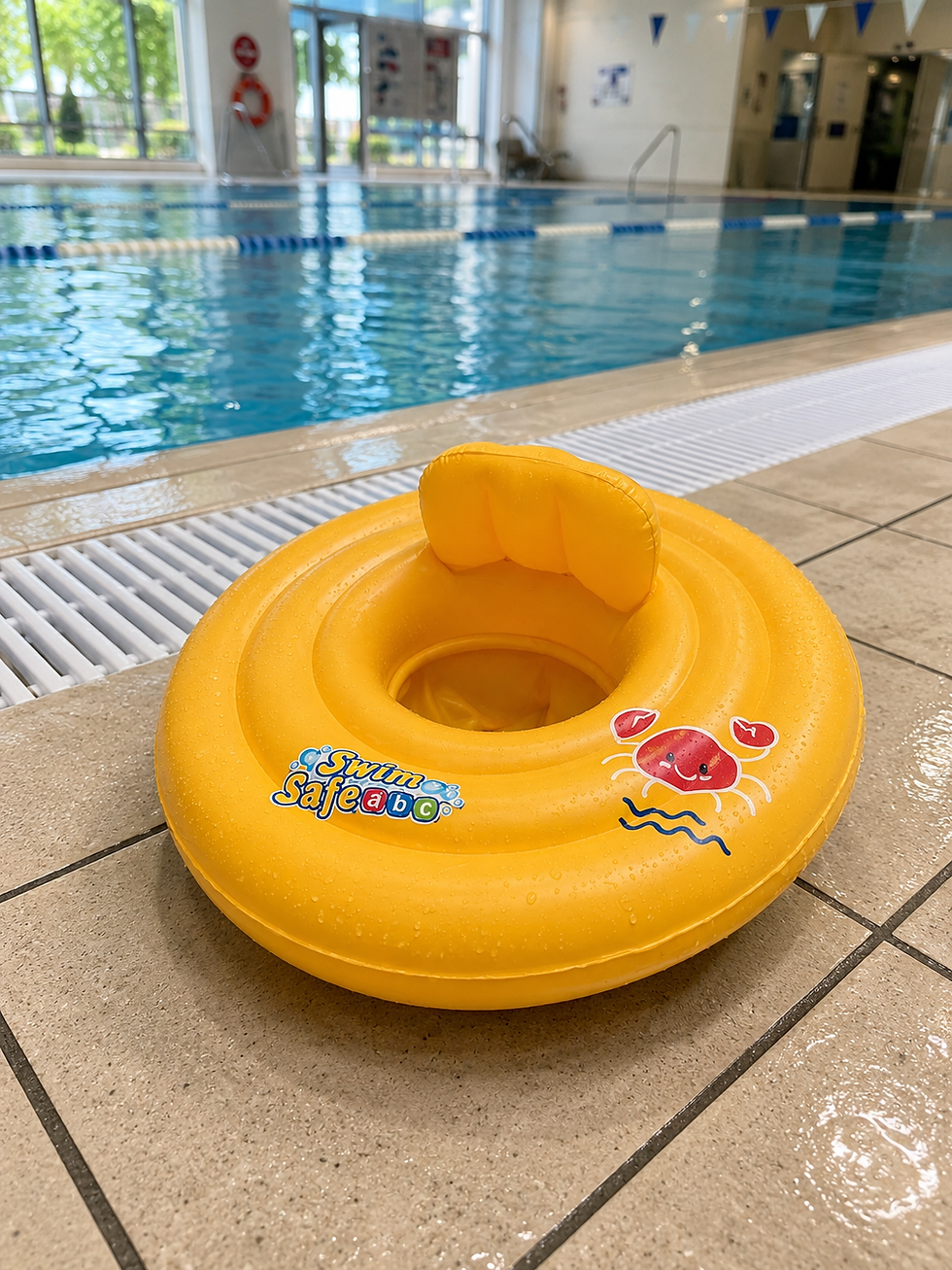
For toddlers and over 1’s go for a swim vest. My eldest still uses his and it has helped him become so confident in the pool.
Please note that even with swim aids you should never leave baby unattended, and always follow safe swim guidance.
Have toys for distraction
Not only will taking toys help distract baby from being overwhelmed by their new environment, toys help encorage exploration, grow confidence in water and build a positive association with swimming. Both my boys loved a watering can, and I used it to gently pour water over their arms. Here are a few great options:

Quit while you’re ahead.
Have in your mind a set amount of time, ideally between 10-20mins. This may seem like a tiny amount of time, especially if they’re enjoying themselves, but it is always best to end on a high note. I tried keeping my eldest in the pool for a long as possible, and after 30 mins he was so tired and just over it, he screamed the entire time I was getting him dressed. Once they’re over 6 months old you can gradually increase the time you’re in the pool.
Time your swim around them.
Timing is so important! Make sure they are well rested and not long fed (although not just fed). Putting a tired or hunrgy baby in a pool is never a good idea. With my first, because we were trying to fit in around the “family swim” time at the pool, I knew his nap time was approaching, and he hadn’t fed for nearly 2 hours. It was a recipie for disaster. I find morning time always works best for my little ones.
Swim nappies!
Swim nappies are essential. Normal nappies are NOT suitable for submersion in water! Choose a soft, kind to skin swim nappy and have a clean and dry normal nappy ready for getting re dressed.

It’s also important to be prepared for any reaction and try to keep calm. Even being totally prepared doesn't guarantee a good first experience, it can take a few trips for babies to adjust. Remember water is a natural environment for your baby, they have the instinct to move their arms and legs.
Heres a helpful list of swimming essential for your swim bag:
Swimsuit
Baby swim suit (neoprene if under one is best)
Bathrobe/poncho towel for you
Large clean and dry towel for baby
Change of clothes
Clean nappies
Swim nappies
Wet wipes
Bottle (if bottle feeding)
Snacks for older kids
Snack and water for you (especially if breastfeeding)
Swim aid
Swim toys
Comments